What to Check When Aquarium Water Turns Cloudy
Cloudiness has several possible causes; check water quality and fish behavior before choosing a response, and avoid treating clear water as proof of safety.
Updated
Cloudiness has several possible causes; check water quality and fish behavior before choosing a response, and avoid treating clear water as proof of safety.
Describe the cloud before trying to remove it
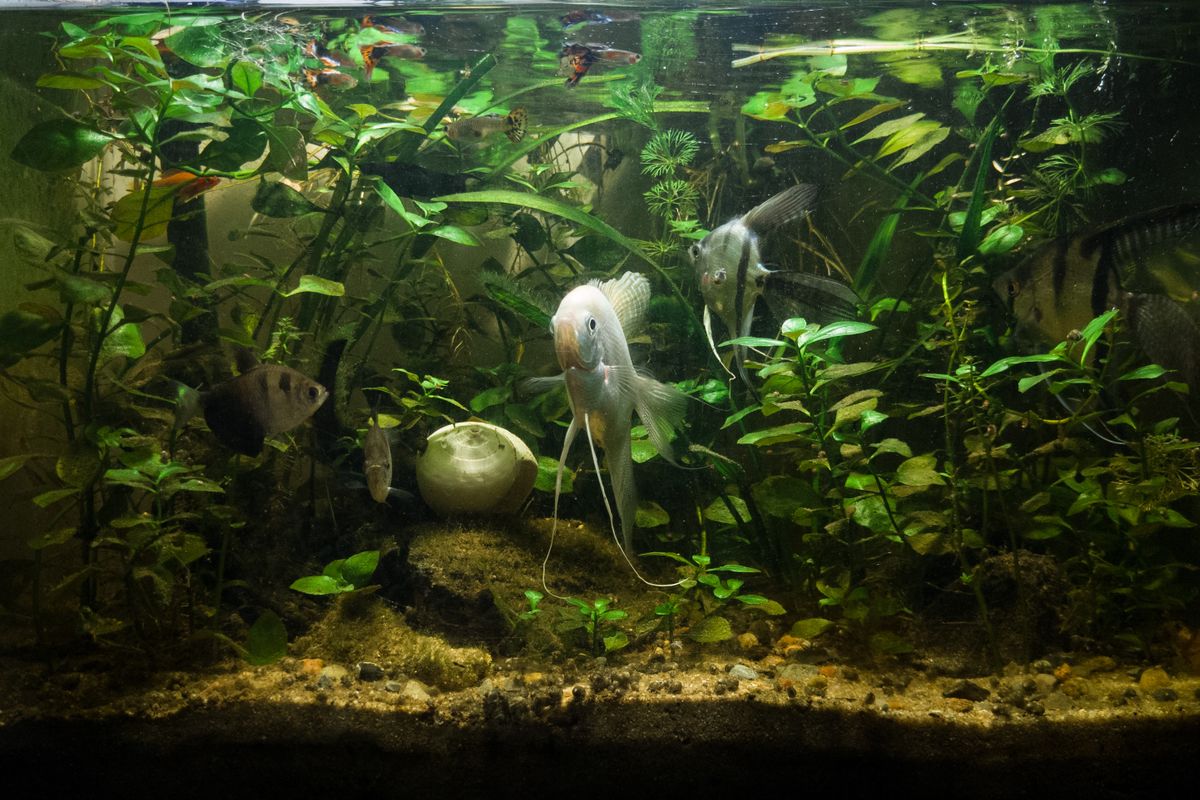
Cloudy water is an observation, not a diagnosis. A pale haze after disturbing substrate differs from green water developing under prolonged light, and both differ from particles blown out of a recently serviced filter. Note when the change began, its colour, how quickly it developed, and what happened immediately beforehand. Look across the tank against a light background without placing yourself or electrical equipment in an unsafe position. A photograph can help you compare the pattern later.
Avoid adding a clarifier as your first response simply because its name matches the symptom. Clearing the appearance does not necessarily correct unsafe water chemistry or a maintenance problem. The fish, the water tests, and the recent history provide a more useful starting point. If an animal is struggling to breathe, losing balance, or otherwise in marked distress, treat the situation as urgent and obtain knowledgeable veterinary or aquarium help. Do not spend the first hour trying to assign the perfect descriptive colour to the haze.
Check the fish and essential equipment promptly
Observe breathing, swimming position, interaction, and responsiveness. Fish near the surface are not always ill, because some species normally use it, but a sudden change across several animals is important. Check the temperature with a reliable thermometer and confirm that the filter and any normal aeration are operating. A motor noise does not prove water is moving as expected. Inspect the actual outlet and look for blocked intakes, detached hoses, or a displaced fitting.
Restore failed essential circulation safely according to the equipment instructions, and seek urgent help if you cannot. Do not expose a powered heater to air or handle wet electrical connections casually. A cloudy aquarium with reduced oxygen availability may need immediate support; the correct action depends on the system and species. Avoid adding incompatible chemicals while investigating. Stabilising the animals' environment takes priority over making the water look suitable for a photograph, and the appearance alone cannot tell you how much time is available.
Test rather than judging safety by visibility
Check ammonia and nitrite, along with other parameters relevant to the aquarium, using reliable methods and the correct instructions. Note the units, date, and whether any recent product might affect interpretation. Temperature and pH can influence how a result should be understood, so keep them available when asking for help. Do not assume clear tap water or a recently purchased test kit means the reading cannot be wrong; procedural errors are worth checking.
If a result is unexpected, repeat carefully while responding appropriately to the animals' condition. A concerning reading should prompt suitable action and expert guidance rather than a wait for the cloud to settle. Correctly prepared partial water changes may form part of the response, but their size and frequency should fit the actual problem, source water, and species. Never use an appearance-only rule such as changing all the water whenever it turns milky. Equally, do not leave fish in unsafe conditions because someone said a new-tank haze is always harmless.
Reconstruct the previous few days
Write down recent feeding, animal additions, plant work, filter cleaning, substrate disturbance, water changes, and product use. Include changes that seemed minor, such as a visitor feeding twice or a timer being reset after a power cut. This history helps distinguish a physical suspension from a developing biological imbalance. It also prevents a helper from recommending an intervention that was already attempted unsuccessfully the day before.
Check for a missing animal without dismantling the aquarium recklessly. A dead fish or decaying plant mass can contribute to deteriorating conditions, and an animal may be hidden in a familiar refuge rather than missing. Inspect accessible areas and remove clearly decaying material carefully. Record what you find. If several changes happened together, acknowledge the uncertainty instead of choosing a confident explanation based only on the most memorable event. The point of the history is to narrow possibilities, not to construct a story that makes the first guess sound inevitable.
Recognise suspended substrate and debris
Fine particles can remain in the water after new substrate is added or established material is disturbed. The timing often provides a useful clue: the haze begins during or soon after the work. Check the substrate manufacturer's preparation instructions, because some products should be rinsed and others should not. Do not apply a universal rinse-until-clear rule without identifying the material. Avoid stirring the substrate repeatedly to see whether the cloud will clear faster.
Suitable mechanical filtration may collect suspended particles, but fine media can clog quickly and reduce flow. Inspect it and maintain it according to the equipment guidance while protecting established biological filtration. A filter outlet pointed directly at a light substrate may keep particles moving continuously; repositioning it appropriately can help if the resulting flow still suits the fish. Visibility should improve without a series of unnecessary chemical additions. Continue testing if there is any concern about waste or the aquarium's biological stability, because more than one issue can exist at the same time.
Understand why a pale biological haze can appear
An increase in suspended microorganisms can create a whitish or grey haze, sometimes associated with changes in available organic material. New aquariums and tanks receiving excess food or experiencing a disturbance may show this appearance. That possibility does not establish that the tank is safely cycled. The microorganisms producing visible haze are not a dependable substitute for the established filtration needed to manage fish waste.
Review stocking, feeding, decay, filtration, and test results rather than repeatedly sterilising the system. Removing all media or performing an aggressive total clean can make biological stability harder to regain. Reduce avoidable waste input while keeping appropriate care for the fish, and remove accessible uneaten food. Monitor the response through observations and testing. If the cause remains unclear or animals are affected, seek experienced assistance. A haze that happens to disappear is not, by itself, proof that the underlying loading or maintenance problem has been resolved.
Investigate green water as a light-and-nutrient issue
A uniformly green appearance can be associated with suspended algae. Review the actual light exposure, including sunlight from a window and lights left on after the intended schedule. A timer that failed in the on position can alter the aquarium's day considerably. Check feeding and nutrient inputs as well. Do not assume that green water means a single nutrient is missing or excessive without other evidence.
Bring excessive lighting back to a sensible regime appropriate to the plants and animals, maintain suitable water changes, and avoid adding waste. Be cautious about treatments intended to kill algae rapidly; their effects and compatibility need to be understood, and decomposing material can create additional problems. An animal purchased to eat algae is not a general solution for algae suspended throughout the water. Specialist equipment may have a role in some systems, but equipment should follow a clear diagnosis and safe setup, rather than becoming the first purchase made whenever the tank changes colour.
Separate staining from a suspended cloud
Wood or botanicals can release dissolved colour that makes water amber or tea-coloured while it remains transparent. That is different from a suspension of particles, although both can occur together. Identify what was introduced and whether it is suitable for aquarium use. Unknown outdoor wood or plant material can introduce risks that a colour description cannot resolve. Check water chemistry and the needs of the fish rather than treating every brown tint as either desirable or dangerous.
If colour is the only concern and conditions are otherwise appropriate, choose a proportionate response based on the species and material. If an unusual smell, surface film, deteriorating material, or animal distress accompanies the colour, investigate further. A normal-looking tint should not be used to excuse a separate water-quality problem. Equally, repeatedly stripping the aquarium to make the water colourless can disturb a system whose residents are well suited to lightly stained water. Decide what needs correcting before selecting a method that changes the appearance.
Avoid a chain of incompatible fixes
Keep a record of every product already added, including dose, time, and its stated purpose. Do not mix clarifiers, algae treatments, pH adjusters, medications, and replacement filter media in an improvised sequence. A treatment may interact with another product or affect sensitive species and invertebrates. Follow the label and obtain qualified advice where health is involved. If you do not know what a product is intended to do, do not put it into the water merely to demonstrate that you are taking action.
When mechanical media is cleaned or replaced, preserve the biological component appropriately. When water is changed, condition and temperature-match replacement water as needed. When feeding is adjusted, keep the animals' nutritional needs in view. These are distinct jobs, even when they happen on the same day. A useful intervention has a clear purpose and a way to judge its effect. Several simultaneous changes may make it impossible to tell what helped, what harmed, and what still needs attention.
Use recovery to improve the routine
Once conditions are safe and the cloud is resolving, compare the event with the normal maintenance routine. Was food being added by more than one person? Did a clogged filter reduce circulation? Was substrate disturbance larger than expected? An identified cause suggests a specific improvement: measured portions, a clearer household feeding record, more accessible prefilter maintenance, or a gentler planting technique. Those changes are more durable than keeping a bottle ready to conceal the next episode.
Continue observing the fish and checking relevant parameters after visibility improves. Keep the notes and photographs if the problem recurs, because repeated events can reveal a pattern that one episode cannot. Seek specialist help for persistent unexplained cloudiness or any continuing animal distress. The successful outcome is safe conditions and a system you understand better, with clear water following from appropriate care. Appearance is valuable evidence, but it should remain one part of the assessment rather than the final test of aquarium health.
Further reading
Use these independent resources to explore the subject and check guidance for your location.