Rainwater for the Garden: Useful Storage, Sensible Care
Plan covered non-potable rainwater storage with a stable base, screened openings, safe overflow and realistic dry-weather demand.
Updated
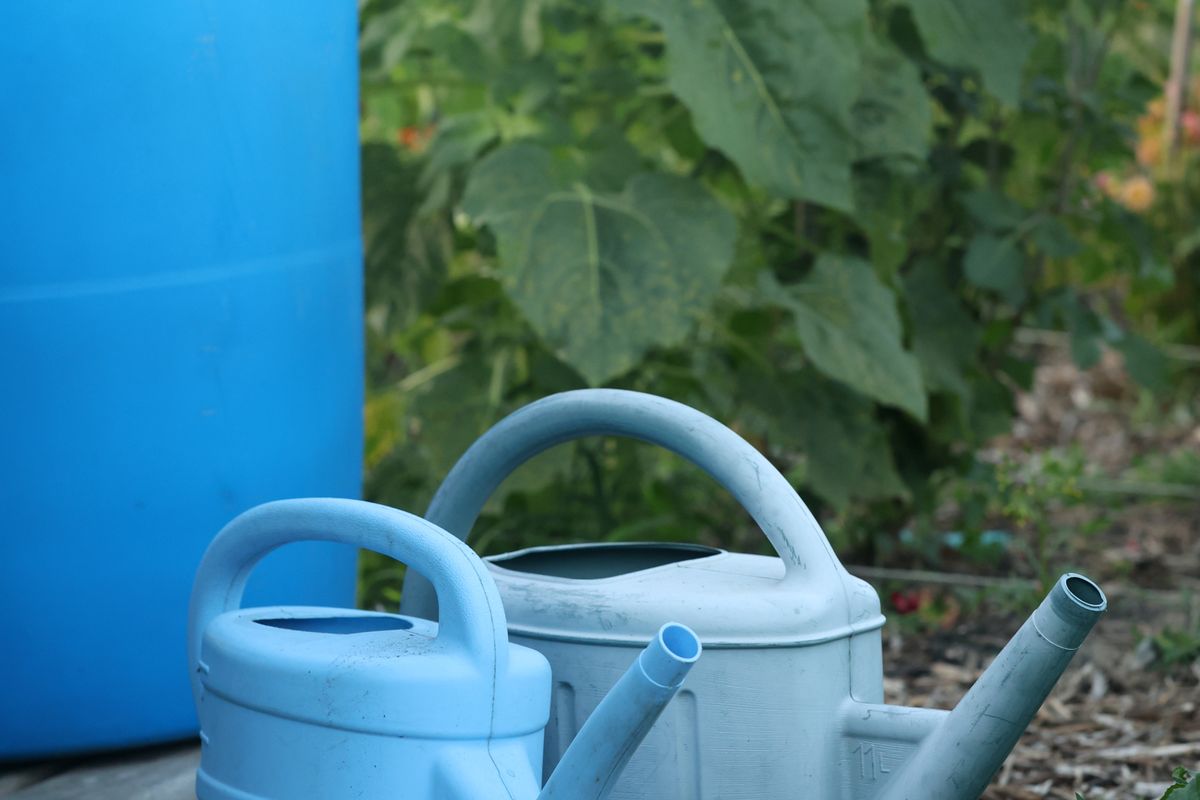
Use a purpose-made covered tank on a suitable base, maintain filters and overflow, and reserve roof-collected water for appropriate non-potable garden uses.
Store water for a defined garden job
A rain barrel or water butt can turn brief rainfall into a useful reserve for dry days. It works best when the storage volume, collection surface and intended use are considered together. A large container is not automatically a better system if you cannot reach the tap, clean the inlet or manage overflow. Begin by deciding which plants you want to water and how you will carry or distribute the water when the weather is dry.
This guide concerns non-potable garden rainwater storage. Water collected from a roof is not drinking water and should not be assumed safe for people, pets, food preparation or aquariums. Roof debris, bird droppings and the storage environment can introduce contaminants. Ornamental plants are often a straightforward intended use, but even then the source roof and local rules matter. If a collection surface may contain hazardous materials, obtain appropriate advice before using its runoff.
Estimate the supply without promising independence
A simple planning calculation uses roof area multiplied by rainfall. One millimetre of rain falling on one square metre represents roughly one litre before collection losses. A ten-square-metre shed roof receiving ten millimetres of rain therefore has a theoretical contribution of about one hundred litres. Actual capture will be lower because of wetting, leaks, splash, diversion and the shape of the system. Treat the calculation as an estimate, not a guaranteed yield.
Compare that supply with demand during the dry period you care about. A collection system can receive plenty of water across a year and still empty during a long hot spell. Seasonal timing matters more than an impressive annual total. If your pots need a substantial amount every day, a small barrel may provide only a short buffer. Water-efficient planting and careful watering remain useful even after storage is installed; the barrel does not create rain when none is falling.
Choose a stable, accessible position
A filled container is heavy. Water weighs about one kilogram per litre, before the tank and support are counted. Use a firm, level base and a stand designed for the load if one is needed. Improvised stacks of loose bricks can shift, especially on soft or uneven ground. Leave access to inspect the back, clean the inlet and operate the tap without twisting awkwardly between a wall and dense planting.
Choose the tap height around the watering can you will actually use. A stand that leaves the spout just too low encourages tipping or lifting a heavy container, neither of which is a good long-term arrangement. Keep the installation away from routes where it creates a trip hazard. On balconies, roofs or elevated decks, obtain structural approval before considering water storage at all. Ground-level advice does not establish the loading capacity of a building.
Select a tank that keeps unwanted access out
Use a purpose-made container suitable for outdoor water storage, with a secure lid and screened openings. Do not reuse a vessel that held chemicals or substances of uncertain identity. A tight, opaque lid reduces light entering the water and helps keep debris and animals out. It must also prevent children or pets gaining access. A loose board placed over an open barrel is not an adequate permanent cover.
Check every opening, including the overflow and inlet, for suitable screening where mosquitoes are a local concern. The details should suit the product and regional guidance, and the screens need inspection because they can clog. Avoid an uncovered dipping tank if you cannot manage its safety and hygiene requirements. A tap makes everyday use possible without repeatedly opening the lid or putting hands and equipment into the stored water.
Keep the collection path clean and appropriate
Inspect gutters and roof valleys for accumulated leaves and debris, arranging safe maintenance rather than climbing unsafely. A leaf filter or suitable diverter can reduce material entering the tank, but it does not sterilize the water. Some systems include a first-flush arrangement that diverts initial dirty runoff; whether it is appropriate depends on the installation. Follow the manufacturer's instructions and use a competent installer where the work is beyond a simple safe connection.
Do not alter shared downpipes or building drainage without permission and a proper plan. A poorly fitted diverter can leak against a wall or interfere with the original drainage route. Check joints during actual rainfall, not only after assembly on a dry day. Water stains on the wall, pooling beside the foundation or an inlet that overflows are signs to correct the installation before relying on it through the wet season.
Plan where excess water goes
A full tank needs a functioning overflow that returns water to a suitable drainage route. It must not discharge against a building, flood a path or send runoff onto neighbouring property. Consider intense rain as well as gentle showers. Small fittings can block with leaves or become overwhelmed if they are not suited to the collection area. Use components designed to work together and inspect them after storms.
Linking tanks can increase capacity, but it also adds connections, weight and maintenance. Follow the manufacturer's arrangement rather than connecting arbitrary hoses at convenient heights. Do not assume that a rain barrel provides guaranteed flood storage: it may already be full when a storm arrives. If flood attenuation is part of the objective, that requires a system designed and assessed for the purpose, not simply a larger container left beside a downpipe.
Draw water in a way that suits the plants
Use stored water at soil level for suitable garden tasks, keeping it away from food-handling surfaces and avoiding unnecessary spray or mist. For edible crops, follow local public-health and horticultural guidance about roof-collected water, especially where it may contact leaves or produce eaten raw. The fact that rain fell cleanly from the sky does not mean water stored after crossing a roof remains equivalent to potable tap water.
Keep watering equipment reasonably clean and label outlets where confusion is possible. Do not connect a non-potable storage system to mains plumbing without the required professional design and backflow protection. A hose running from a barrel may have little pressure because gravity head is limited. If a pump is needed, choose equipment intended for the task and have electrical aspects installed safely. A low-flow watering can is often the simplest option for a small garden.
Keep a separate clean can if you also water seedlings with potable water. Labelling both cans avoids accidentally using stored roof runoff on a tray intended for food growing indoors. When transporting water, choose a load you can lift comfortably and keep the path clear. Several smaller trips may be safer than carrying a full oversized can over steps. If mobility makes that difficult, solve the access problem with an appropriate distribution arrangement rather than leaving the tank unused through the dry season.
Prevent stagnation through routine inspection
Use the reserve regularly when conditions call for it, while keeping the lid closed between inspections. Watch for blocked screens, excessive sediment, algae or unusual smells. A little debris does not mean every batch must be discarded, but persistent foul water indicates a source or maintenance problem. Investigate what is entering and how long water is standing rather than adding household chemicals in an attempt to make it seem clean.
Clean the container according to the manufacturer's instructions when it is appropriately emptied, keeping contaminated wash water away from places where it could cause harm. Never enter a tank. Large storage vessels can present serious confined-space hazards and require professional maintenance procedures. For a small domestic barrel, cleaning from outside with suitable tools should be part of the original access plan. If the only way to reach the inside involves climbing in, the setup needs reconsideration.
Adapt the system to cold and dry seasons
In freezing climates, exposed taps, pipes and partly filled fittings can be vulnerable to damage. Follow product instructions for winter drainage or protection. A cracked fitting may remain unnoticed until the next thaw or heavy rain. Keep the original building drainage route functioning when the collection system is taken out of use. Do not block a downpipe to preserve a barrel installation that should have been disconnected for the season.
During drought, prioritize the plants that most need support, such as new plantings and vulnerable containers, while following local water-use rules. Stored water is finite, so inspect moisture before applying it. Mulching suitable garden beds and watering slowly at the roots can make the reserve more useful. When the tank empties, avoid scraping or stirring the dirtiest sediment into a watering can just to obtain the final few litres.
Judge the installation through a full weather cycle
After the first wet and dry periods, review the actual performance. How quickly did the tank fill, how long did it last and was the tap convenient? Did any overflow escape the intended route? These answers tell you whether another tank, a better filter or a simpler arrangement would be worthwhile. A small reliable system can outperform a complicated installation that is awkward to inspect and difficult to clean.
Keep a short maintenance note with the product details and any replacement parts. Check the lid, stand and connections periodically, especially after storms or freezing weather. Useful rainwater storage is quiet infrastructure: stable, covered, accessible and connected to sensible watering habits. Once those details are right, the stored water becomes a practical buffer in the garden rather than another heavy object whose safety and condition are easy to forget.
Further reading
Use these independent resources to explore the subject and check guidance for your location.