Herbs in Pots: Give Each One the Conditions It Wants
Grow a useful herb collection by separating dry-loving woody herbs, moisture-loving leaves and cold-sensitive annuals.
Updated
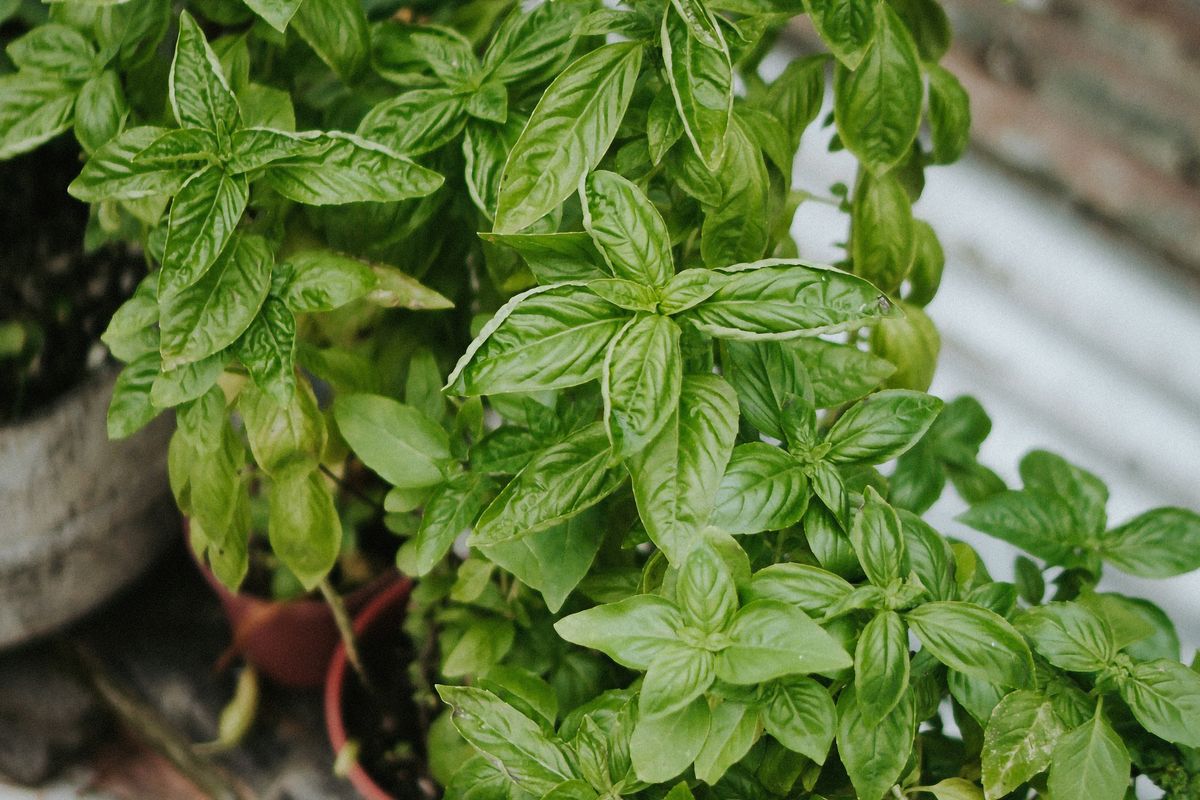
Group herbs by light, moisture and temperature needs; harvest gently from established plants and keep vigorous mint in its own pot.
A kitchen collection needs more than one watering routine
Herbs are grouped together in the kitchen because their leaves add flavour. In the garden, that label hides very different plants. Rosemary, mint and basil do not share the same tolerance of cold, shade or wet roots. A handsome mixed bowl can therefore become a compromise in which one plant thrives while another slowly declines. Begin by choosing the herbs you use, then group them by growing conditions rather than arranging every familiar name in one container.
Three separate pots are often a better first herb garden than one elaborate planter. You can water a leafy basil plant without soaking a thyme that is still moist, move parsley out of fierce afternoon heat and contain a spreading mint. Separate pots also make replacement simpler when an annual finishes. Keep the collection near enough to the kitchen that harvesting is convenient, but do not sacrifice the light the plants need merely to place them beside the door.
Divide the collection into practical groups
Many Mediterranean culinary herbs, including rosemary, thyme, sage and oregano, generally prefer good light and freely draining conditions. They are not immune to drought in pots, but they usually object to a permanently saturated root zone. Leafier herbs such as parsley, chives and mint tend to appreciate more consistent moisture. Basil needs warmth and protection from cold, with enough water to support its soft leaves. These broad groups help organize the collection without pretending that every variety behaves identically.
Local climate still matters. A rosemary that stays outdoors in a mild winter may need a different arrangement where container roots freeze hard. Basil set out during a brief warm spell can suffer when nights turn cold again. Choose varieties and timing for your region, and read the plant label for mature size. A bay tree is a long-lived woody plant with a different container commitment from a few seasonal coriander seedlings.
Buy a plant you can actually keep growing
Look for compact, healthy growth and check the underside of leaves before bringing a plant into a collection. Avoid a pot whose stems are collapsing at the soil line or whose roots smell unpleasant. A densely packed supermarket herb is often grown for rapid culinary use rather than a long life in the same small pot. It may still be worth growing on, but it needs careful handling and realistic expectations.
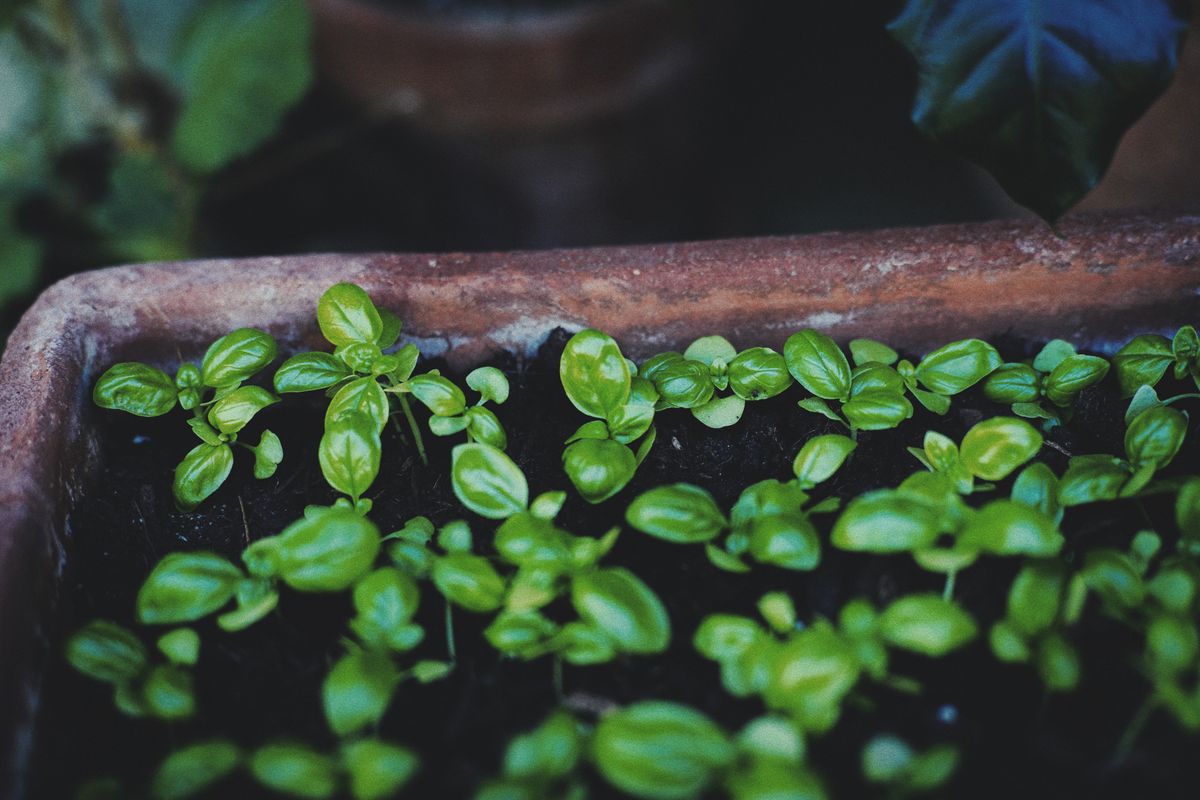
With crowded basil, for example, several seedlings may be competing in a very small volume. You can use some for the kitchen and grow a smaller number on in suitable pots, separating gently only if the roots allow it. Do not rip a stressed root ball into dozens of pieces and leave each in a hot exposed site. Water, shelter and a short settling period matter more than immediately creating the maximum possible number of plants.
Give roots a suitable home
Choose pots with drainage holes and enough room for the expected growth. A tiny decorative cup can become a daily watering problem, while a very large pot around a small plant can remain wet for too long in cool weather. Use a container growing medium appropriate to the herb group. A freely draining mix can suit woody Mediterranean herbs, while a moisture-retentive but aerated medium is useful for thirsty leafy herbs. Follow a reliable product specification rather than adding random quantities of sand.
Keep the growing surface a little below the rim so water can soak in without carrying the medium over the edge. Plant at an appropriate depth and keep woody stem bases clear. Gravel at the bottom does not substitute for a functioning drainage hole. If you place a nursery pot inside an attractive outer container, lift it periodically to check that water is not collecting unseen. This small inspection prevents many apparently mysterious winter losses.
Harvest to shape the next growth
For established basil, pinching or cutting just above a pair of leaves can encourage branching. Take small amounts from several stems rather than stripping every leaf from one. On rosemary and thyme, harvest young leafy growth while retaining enough foliage for the plant to recover. Avoid cutting deeply into old bare wood without species-specific pruning guidance. A cooking harvest should not accidentally become severe renovation pruning.
Parsley is usually harvested by taking outer stems near the base while leaving the central growing point to continue. Chives can be cut for use and allowed to regrow when conditions support active growth. The exact amount to remove depends on the size and vigour of the plant. A newly planted small specimen needs time to establish before supplying a large meal. If you use a herb frequently, grow more than one pot rather than continually taking a recovering plant back to almost nothing.
Give mint its own boundaries
Mint grows by spreading stems and roots, which makes it useful and vigorous but awkward in a shared planter. Give it a separate container so it cannot dominate slower companions. Even then, inspect drainage holes and any contact with surrounding soil; roots can escape from a neglected pot. Cut and refresh the plant as appropriate to the variety and season, and divide or repot when the root mass becomes congested.
A mint pot needs moisture, but it should not become an anaerobic bucket. During hot weather, check beneath the surface rather than allowing a lush plant to wilt repeatedly. In winter, reduce watering according to growth and weather while keeping drainage open. Rust-coloured spots or persistent decline deserve identification rather than automatic feeding. Remove affected material appropriately and seek local horticultural advice if the problem recurs, especially before sharing divisions with someone else.
Treat annual herbs as seasonal crops
Coriander and dill can run to flower quickly under conditions that do not favour prolonged leaf production. Heat, day length, root disturbance and the variety all influence the result. Instead of trying to keep one pot in a juvenile state forever, sow small successive batches when local conditions suit them. Leave adequate root space and thin seedlings rather than allowing a dense crowd to compete until everything is weak.
Basil is particularly sensitive to cold. Move it outdoors only when suitable warmth is established, and acclimatise it gradually to brighter light and wind. A sunny indoor window may help early growth, but low light produces long, weak stems that no amount of fertilizer can make compact. If you are sowing inside, plan where the seedlings will live after germination. A warm shelf with insufficient light solves the first stage and creates a problem at the second.
Water the herb rather than the label
Feel the medium and observe the pot's weight where it is safe to lift. A thyme in a porous terracotta pot on a windy ledge may dry faster than expected, despite its reputation for tolerating dry ground. A mint in a large glazed container may still be wet after rain. The broad preference tells you what conditions to aim for; the current root zone tells you whether water is needed today.
Apply water slowly around the medium and allow excess to drain. Avoid a daily decorative splash that wets only the surface. If a root ball has become very dry, rewet it gradually and check that water is not simply bypassing the centre. Keep saucers from holding ordinary herb pots in a permanent pool. The exception is a properly designed reservoir system used as intended, not an accidental collection of rainwater in a sealed outer pot.
Feed for useful growth, with restraint
Container nutrients are finite, but more fertilizer is not always better. Follow an appropriate product's instructions and account for any fertilizer already included in fresh growing medium. Leafy herbs harvested regularly may need a different feeding routine from slow-growing woody plants. Do not increase the concentration because leaves are pale without checking light, root condition and watering first. Excess salts can harm roots and make leaf-edge damage worse.
Only harvest plants correctly identified as edible culinary herbs. Ornamental lookalikes and garden plants with similar common names are not interchangeable. If using any pesticide, it must be explicitly suitable for the crop and location, and its harvest interval must be observed. Do not improvise sprays from household cleaners or assume that a homemade mixture is harmless because its ingredients are familiar. Wash harvested herbs as appropriate and keep them away from contaminated soil, pet waste and dirty runoff.
Renew the collection before it becomes a struggle
Every few weeks, look beyond the next harvest. Is a woody herb outgrowing its pot? Has an annual begun its flowering phase? Is a mint so congested that water barely penetrates? Make one practical change at a time: repot at a suitable season, sow a replacement batch or reduce the number of herbs you rarely use. A container garden is easier to maintain when each pot earns its place through healthy growth and regular use.
Keep simple labels with the variety name and purchase or sowing date. The details become useful when one basil performs well and another bolts early under the same conditions. At the end of the season, choose what to overwinter, replace or compost. A successful herb collection need not remain identical all year. It should supply good leaves when the climate supports them, allow perennial plants a sustainable routine and make the short trip from garden to kitchen enjoyable.
Replace faded labels before winter, while the leaves still make each plant easy to recognise.
Further reading
Use these independent resources to explore the subject and check guidance for your location.