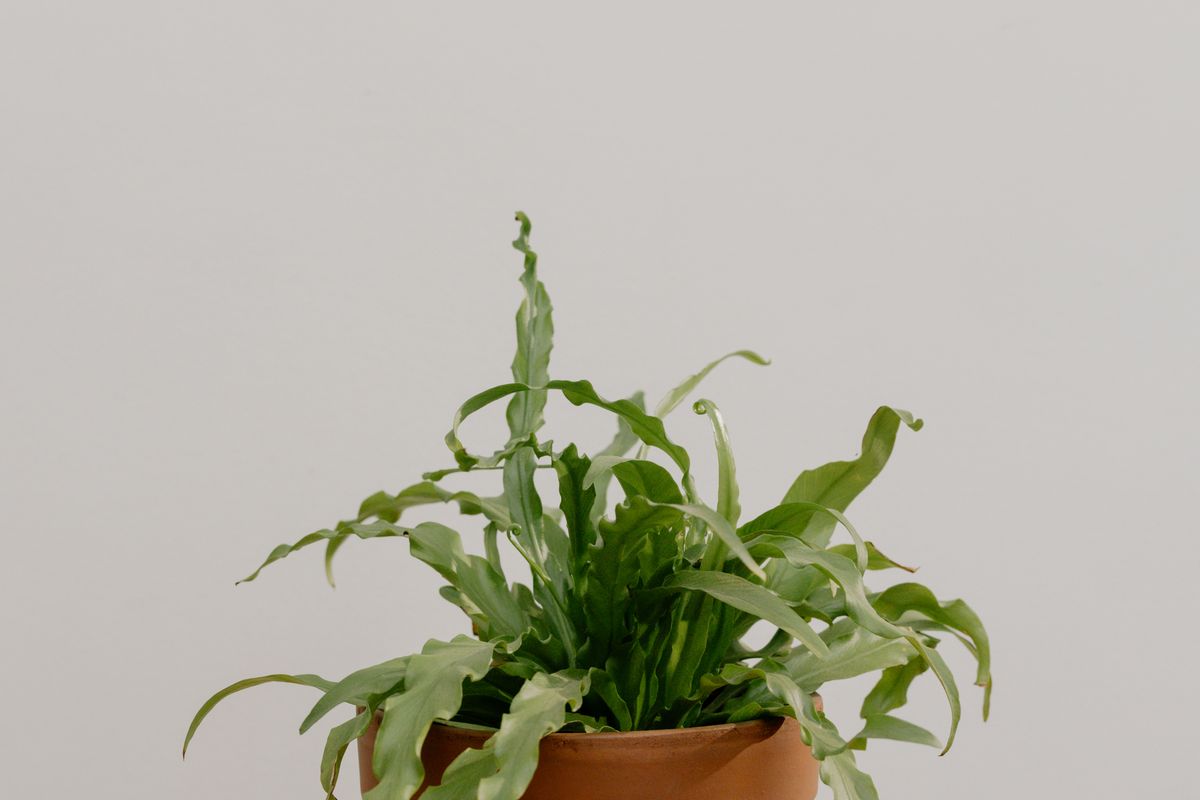
Reading the Light in Your Home Before Buying a Plant
Learn to assess direct sun, window distance, and seasonal shade before choosing a houseplant or changing its position.
Updated
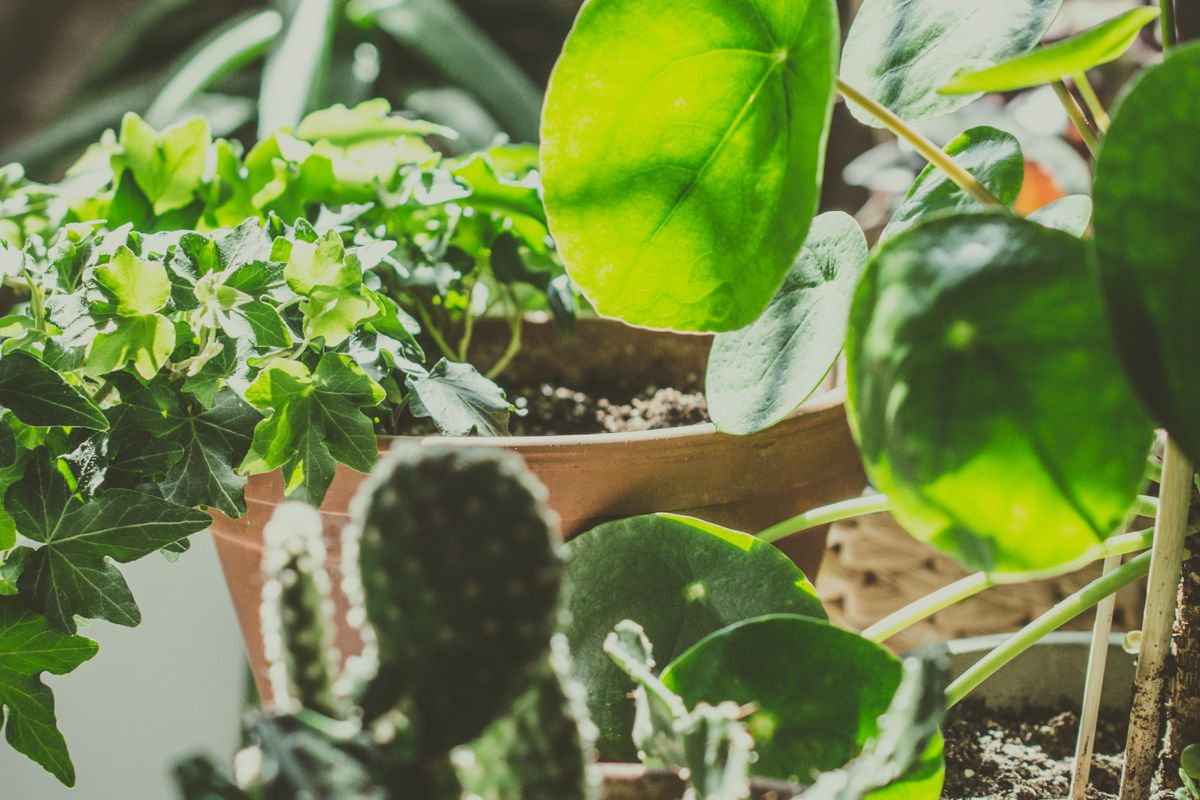
Place a new foliage plant in bright indirect light and adjust gradually. Use a sheer curtain where strong afternoon sun falls on leaves.
A bright room is not one uniform growing space
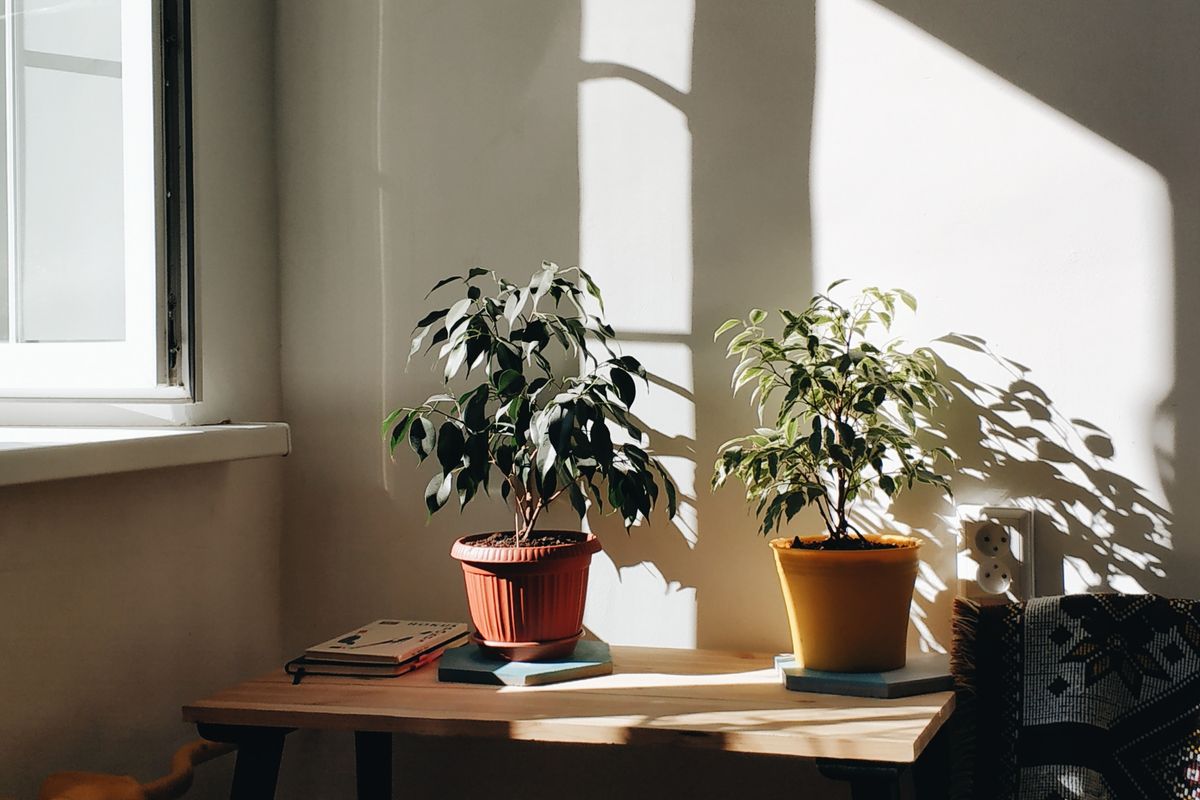
People judge a room by how comfortably they can see across it. Plants respond to the light arriving at their leaves over time. A room that seems pleasantly bright to a person may contain a dark shelf only a short distance from the window. That distinction explains why a plant can survive near the glass and slowly decline in a corner of the same room.
Start by looking at positions rather than buying a plant for an empty space. Mark the places where direct sun actually falls and the places that receive only reflected daylight. Include the future height of the plant: a shelf may shade the top leaves, while a tall plant can rise into a much brighter zone.
You do not need to calculate a professional lighting plan. A simple map of light, shade and usable access will help you choose a plant that belongs in the room. It also gives you alternatives if the first position turns out to be less suitable than expected.
Follow a day before trusting a compass label
Window direction is useful, but it is only part of the picture. Morning sun, hot afternoon exposure and a deeply shaded courtyard produce different conditions. Buildings, balconies, roof overhangs and trees can block light regardless of which way the window faces. The hemisphere also changes how familiar north-facing and south-facing advice should be interpreted.
Choose an ordinary day and check the possible plant positions in the morning, around midday and later in the afternoon. Note whether direct rays hit the leaves, how long they remain and whether the position becomes hot. Repeat after a change of season rather than assuming that one sunny day describes the year.
Cloud cover complicates the exercise without making it useless. Record it. A plant receives a sequence of bright and dull days, not a permanent version of the day you happen to inspect. The most useful map describes the normal range and any obvious extremes.
A shadow test gives you a comparison
At leaf height, hold your hand over a white sheet of paper. A crisp dark shadow usually indicates strong directional light, often direct sun. A softer shadow suggests more diffuse illumination. A barely visible shadow tells you that this position is much dimmer than another position that produces a clear outline.
Use the test to compare locations rather than assigning exact growing requirements. The distance between hand and paper, the time of day and the direction of incoming light all influence the result. Repeat it in a consistent way. A bright patch at noon does not tell you how much light arrives during the rest of the day.
Your eyes adjust quickly when you walk from a bright window into a dimmer room. This makes intuition less reliable than it feels. A repeated shadow comparison, supported by notes about direct sun, can reveal differences that are easy to overlook while arranging furniture.
Distance from glass matters more than it looks
Light usually falls away rapidly as you move into a room, although reflection and window size affect the pattern. A plant positioned a little farther back may receive much less useful light, particularly if only a small part of the window is visible from its leaves. Avoid treating the whole length of a wall as equivalent.
Stand where the plant will be and look toward the window at leaf level. Can you see a broad area of sky, or mainly a curtain, wall and overhang? A partial obstruction can matter more than the room’s overall appearance. Tall furniture and neighboring plants can also shade the lower leaves.
This does not mean every plant should be pressed against glass. Hot panes, cold nights and intense direct sun create other difficulties. The task is to find a useful balance, with enough light for growth and enough separation to avoid temperature stress or scorching.
Read new growth before blaming the old leaves
Plants that receive too little light may make long stretches of stem between leaves, lean strongly toward the window or produce smaller new foliage. Growth can slow and the pot may take longer to dry. None of these signs proves a lighting problem by itself, but together they help explain a gradual change.
Compare the newest growth with the plant’s earlier growth and normal form. A naturally trailing vine should not be judged by the standard of a compact rosette. Variegation, maturity and seasonal changes can also influence appearance. Identify the plant before interpreting every difference as a failure.
Old damage remains a record of the past. A leaf scorched during a sudden move will not turn green again because the next position is better. Watch whether fresh damage stops and whether new growth develops more normally. Those changes give a clearer measure of the current arrangement.
Make a brighter move in stages
A plant grown under gentle nursery light or in a dim shop has not necessarily developed tolerance for strong direct sun. Moving it straight to a hot exposed window can cause damage even if the species ultimately prefers bright conditions. Increase exposure gradually and inspect the leaves during the transition.
A sheer curtain can soften strong rays while you learn the position. Another option is to begin slightly farther from the window and move closer in steps. Keep the watering pattern under observation because brighter conditions can change water use. Avoid changing the pot and fertilizer routine at the same time unless a separate problem requires it.
The pace depends on the species and intensity of the light. A succulent adapted to strong sun and a tender shade-loving fern should not undergo identical treatment. Use a reliable species guide alongside your room observations rather than making the curtain a universal solution.
Useful light and comfortable temperature are separate
A sunny sill may become very warm in the afternoon and cold after dark. Leaves touching glass can experience conditions that a room thermometer on the opposite wall does not reveal. A plant that appears correctly lit may still be stressed by these local temperature extremes.
Check the position at the uncomfortable times, not only while the room is occupied and heated. Move leaves away from the pane, keep plants out of cold drafts and avoid placing them directly above strong heater airflow. Maintain enough space for curtains to close without trapping foliage against glass.
Watering does not compensate for every kind of heat stress. If the root ball is already moist, adding more water may create a root problem while the leaves remain overheated. Shade or a better position addresses the source more directly. Read leaf symptoms together with temperature and moisture.
When a grow light becomes a sensible option
Some rooms simply do not provide enough daylight for the plant you want to grow. In that case, choose a more suitable plant, change the location or consider a purpose-made grow light. Ordinary decorative lighting should not be assumed to provide enough useful illumination merely because it looks bright in the evening.
Follow the light manufacturer’s guidance on distance, operating time, ventilation and electrical safety. Keep a regular dark period rather than running lights continuously. The correct setup depends on the fixture and plant; a single distance or timer setting cannot describe every product.
Check the whole plant after installation. The upper leaves may be much closer to the fixture than the lower growth, and a shelf can cast strong shadows. A timer helps consistency, but it does not replace observing the plant. Adjust the arrangement when growth approaches the light.
Keep the arrangement easy to live with
A successful plant position needs practical access for watering, cleaning and inspection. It should not require balancing on furniture or carrying a heavy pot across a room every few days. If the best light falls in an awkward place, a stable stand or a smaller plant may solve the problem more safely than an elaborate arrangement.
Turn suitable free-standing plants a little during routine care to reduce persistent one-sided growth. Leave climbing plants attached to their supports and consider the direction of new leaves before moving them. Dust smooth foliage gently when needed so that the light reaching the leaf is not unnecessarily obstructed.
Review your light map when the season changes, nearby trees leaf out or furniture moves. The goal is not to find one perfect position forever. It is to understand the room well enough to recognize when the plant needs a modest adjustment and when it is better left alone.
A simple comparison to make before shopping
Imagine two empty positions: a table near a broad window and a shelf across the room. Both look bright when you enter, but the table receives an hour of direct sun and a wide view of the sky. The shelf sees only a narrow slice of the window. They are different growing environments, even if they share the same room temperature.
Choose a plant whose needs suit one of those environments, then check that the mature size fits. This reverses the common sequence of buying an attractive specimen and looking for somewhere to hide its pot. Keep the care label as a starting point, but translate words such as bright and indirect into observations of the actual room.
A plant described as tolerant of low light still needs useful light. Tolerance often means slower growth and less frequent watering, not an ability to grow indefinitely in a windowless corner. If the position is genuinely dark, change the lighting plan before spending money on replacement plants.
Further reading
Use these independent resources to explore the subject and check guidance for your location.